


From traditional to 3D virtual: Understand how to create a 3D virtual store for your brand


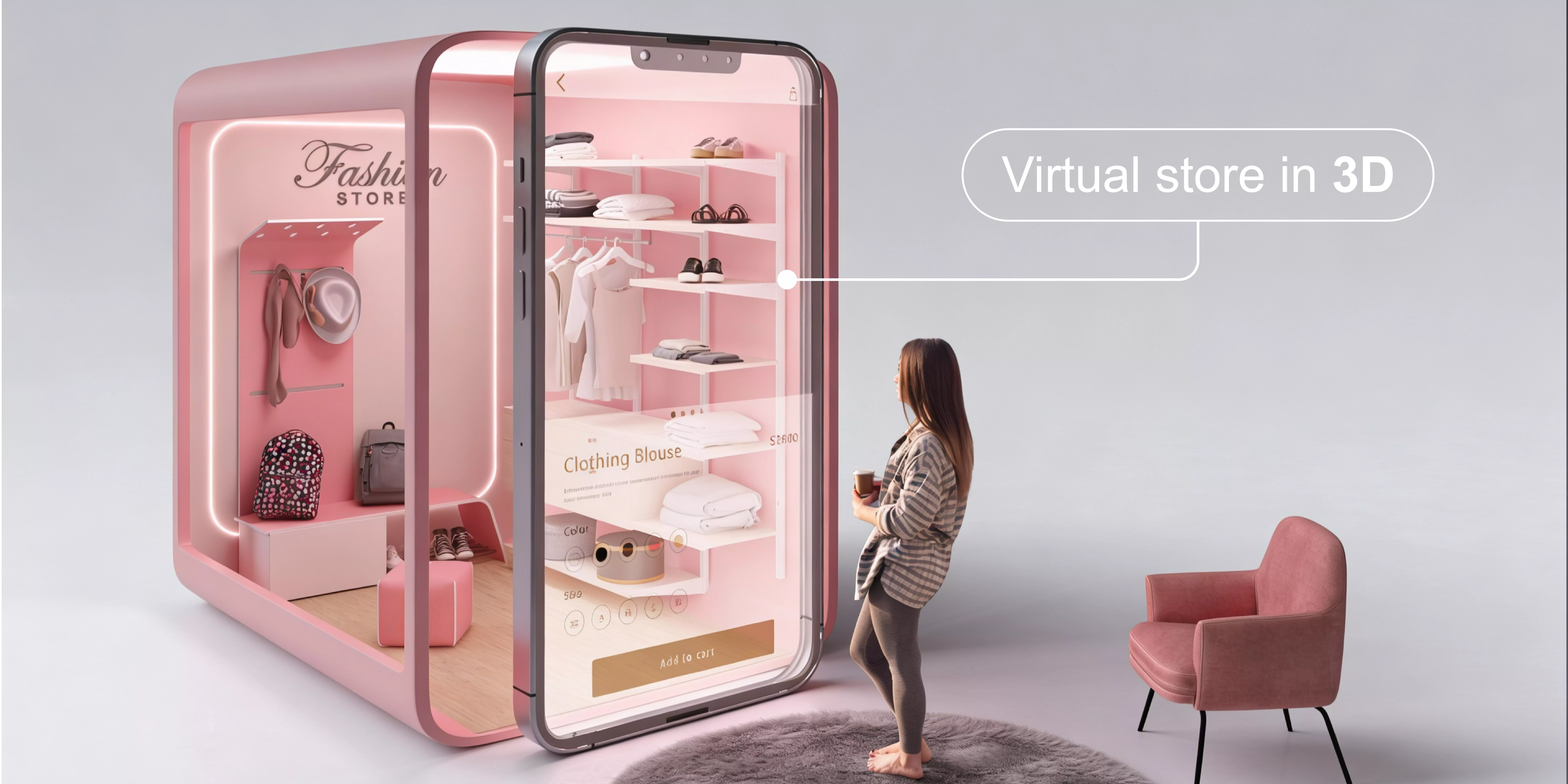
With the integration of 3D virtual stores, the e-commerce industry has seen immense growth and has helped to build stronger relationships with its customers by offering them engaging and interactive features during online shopping. With the help of these interactive and engaging online stores, businesses can create a replica of their physical store, enabling them to connect and reach a wider audience globally.
The global 3D e-commerce market generated USD 3.1 billion in 2024 and is predicted to grow from USD 3.8 billion in 2025 to about USD 21.5 billion by 2034, recording a CAGR of 21.3% throughout the forecast span. It also shows the growing adoption and usage of the 3D virtual store in the e-commerce industry and how it helped the industry to shift from traditional 2D image websites to interactive 3D virtual stores, helping them to connect more with their customers.
Since using a 3D virtual store helps businesses in multiple ways by increasing conversions, reducing returns, and boosting engagement, creating a virtual store in 3D is a cumbersome process because it requires lots of time and resources. In this section, I will help you to understand how to create a 3D virtual store for your e-commerce platform and how it will help you to shift from the traditional way of selling to the modern way of displaying products.

What is a 3D virtual store?
A 3D virtual store is an online tool that helps businesses create an interactive digital environment inspired by or replicating the physical shop, which helps users explore products available in the online store by using interactive features, such as 3D models, virtual try-ons, and 360-degree viewers. It uses advanced technologies, such as augmented reality, artificial intelligence, virtual reality, and 3D modeling, enabling users to "walk through" the products and offering them the facility of "try before you buy" before making any purchase decisions.
It also helps users to engage with products virtually by enabling them to visualize items virtually in the present moment by enhancing the traditional way of static sites by using 3D virtual stores with interactive features, such as exploration, 360° views, virtual try-ons, and assistant chats. Apart from that, it also helps businesses to increase engagement and experience for their customers while bridging the gap between online and in-store shopping journey experiences.
How does it work?
- Digital twin: It creates a digital replica of their products by using a 3D scan or model, which will help their customers to explore products with the help of 3D models and 360-degree viewers while helping them to bridge the gap between online and offline shopping experiences.
- User-friendly navigation: It provides end users with a user-friendly interface and navigation, which they can use to move through the entire virtual space with the help of a mouse, keyboard, touch, or VR headset, along with digital arrows or clicks.
- Interactive feature: It helps businesses to provide their customers with interactive and engaging features, such as offering detailed information and hotspots, enabling them to understand products by studying their details, demos, or AR features.
- Advanced technology: Some of the 3D virtual stores use advanced technologies, such as 3D rendering, augmented reality, artificial intelligence, and virtual reality, which will help users visualize products and items available in the space while offering them accessibility on various devices.
Key features
- Immersive environment: It provides users with an immersive and engaging shopping environment by enabling them to explore and visualize products virtually in real-time while offering them 3D layouts and high-quality visuals for better experiences.
- Interactive product viewer: It provides users with interactive and engaging 360-degree product viewers along with some exciting features, such as rotation, spinning, and zoom, which will enable them to inspect products from different angles and perspectives.
- AR try-on: It provides users with a virtual try-on feature for various products, including makeup, jewelry, accessories, watches, and eyewear, which they can use to try products realistically while tracking their facial expressions and movements to offer a lifelike experience.
- Seamless shopping: It helps businesses to provide their customers with a seamless shopping experience by enabling them to perform add-to-cart and checkout easily on the e-commerce store by offering them a user-friendly interface.
- Cross-platform compatibility: It helps businesses to provide their customers with a similar shopping experience by enabling them to integrate the virtual store for different devices and platforms, such as web, mobile, and VR devices.
- Personalized experience: It helps businesses to provide customers with a tailored shopping experience by offering them product suggestions based on their behavior and enabling them to customize products according to their needs and preferences.
Benefits of using a 3D virtual store for businesses

Using a 3D virtual store instead of a static website helps businesses in multiple ways and provides significant benefits, which include higher customer engagement, increased conversion rates, and lower product return rates. With the integration and implementation of an immersive and interactive experience, they can also bridge the gap between online shopping and in-store experience by providing their customers with a lifelike visualization.
Therefore, before using the virtual store for your business, it is important to understand its benefits and how it will help you in reaching a wider audience and increasing revenue. In this section, I will tell you about the advantages of using a 3D virtual store for online sellers and businesses in order to help them build stronger bonds with their customers.
1. Enhanced customer experience
The 3D virtual store helps businesses to let their customers explore products dynamically by enabling them to zoom in on intricate details and view items from every angle, which closely approximates the in-store experience that cannot be matched by using static 2D images on e-commerce platforms.
It also helps businesses to provide their customers with a realistic and lifelike shopping experience while increasing their satisfaction and trust towards the brand and its products.
2. Increased user engagement
It helps businesses to increase their engagement rate by offering their customers 3D visuals and interactive features to explore products interactively by using features such as 3D models, virtual try-ons, 360-degree viewers, and more, enabling them to inspect products from different angles and perspectives.
Apart from that, it also encourages users to spend more time on the website while exploring products and building a stronger connection with the brand, which will also help the brand to see a hike in the overall customer session time.
3. Increased purchase confidence and satisfaction
It helps brands and businesses to provide their customers with a detailed and accurate visualization of products, which will help them better understand the product's features, size, and scale before making any purchase decision.
Apart from that, it also helps businesses to reduce uncertainty, which can also reduce the abandoned cart rates by increasing customer trust and satisfaction towards the brand.
4. Reduced product return rates
Using a 3D virtual store helps businesses to reduce the product return rates by providing their customers with a clear understanding of the product with the help of advanced and engaging features, such as 3D models, 360-degree viewers, and virtual try-ons.
It will help the business to reduce the product return rate for various e-commerce products, such as jewelry, eyewear, makeup, and accessories, while helping the brand to save substantial logistics and restocking costs.
5. Higher conversion rates and sales
By using and incorporating 3D modeling and augmented reality experiences, brands and businesses experience increases in conversion rates and average order values, as it helps their customers be more likely to commit to a purchase by increasing their confidence during online purchases.
Therefore, using the 3D virtual store also helps businesses to reach and connect with a wider audience, irrespective of their geographical location, enabling them to increase their sales and conversion rates while building strong customer relationships.
6. Personalized shopping experiences
It provides customers with a personalized shopping experience by enabling them to tailor products according to their needs and preferences with the help of 3D product configurators.
Apart from that, it also offers personalized recommendations based on customer behavior and purchase history while allowing them to customize colors, materials, and features of products in real time, creating a unique and personalized shopping journey that enhances satisfaction.
{{component="/internal/widgets"}}
Detailed process on how to create a 3D virtual store
Creating a 3D virtual store includes multiple steps for businesses, such as defining goals, choosing a 3D platform/builder, designing the space, adding realistic 3D product models, and integrating interactive elements like shopping carts, which helps them to build an interactive and immersive experience for their customers. It is very necessary to understand the steps that must be followed to integrate and build a 3D virtual store along with digital design, 3D asset integration, and user-friendly navigation.
In this section, I will provide you with detailed information about the steps included in the creation of a 3D virtual store and how it will help you provide your customers with an immersive experience during online shopping.
1. Planning and setup
- Define goals: Before integrating the 3D virtual store, it is very important to understand what your goals are and what you want to achieve, which includes engagement, sales, and brand building, and to understand what your audience is.
- Choose a platform: Once you define your goals and needs, select a 3D platform that aligns with your goals and needs, which also lies under your overall budget and requirements.
- Select a template or environment: Then, select a base that provides you with a 3D building or layout section, along with the ability to design a custom environment or, if required, a digital twin of your physical space.
2. Design and content
- Create or convert 3D models: Now, build models of your products by using professional tools, AI-assisted solutions, or 3D marketplaces, or convert pre-existing images and videos of your products into 3D models to provide your customers with an enhanced experience.
- Customize and decorate: Add the 3D models of your products to shelves and customize them according to your needs and preferences to create a replica of your store's look with the help of drag-and-drop features by applying textures and lighting for realism.
- Add interactivity: Be sure to make your store interactive by adding engaging features like click-to-view product details, zoom, color customization, music, and direct links to purchase, which will keep your customers engaged during virtual shopping.
3. Integration and launch
- Integrate with an e-commerce platform: Now, integrate the virtual store with the pre-existing e-commerce platform, such as Shopify or Wix, which will help you to create a sync between the store and backend services to perform seamless inventory and checkout processes.
- Customize branding: Now, customize the virtual store according to your brand identity by adding a logo, tagline, and branding elements, which will help you to provide your customers with a similar and trusted experience throughout the website or app.
- Preview and test: Before making your virtual store live, always preview and test it to see how customers will experience the store on different devices, such as desktop, mobile, and VR devices.
- Publish and promote: After previewing and testing, it's time to make your store live by making sure that it is accessible for everyone and embedded properly on your site. Also, promote it through different channels, such as social media, email, and ads, to inform your customers.
Applications of a 3D virtual store for different industries
A 3D virtual store can be used for various industries because it helps businesses to provide their customers with an immersive and interactive shopping experience by enabling them to create digital environments inspired by or replicating physical stores. It can be used for several industries like fashion, furniture, automotive, and beauty, which will enable brands to provide their customers with real-time visualization, help them reduce product returns, and engage them with lifelike experiences.
Apart from that, it also helps businesses to manage their layout planning and B2B for complex product showcases while enhancing e-commerce by letting their customers closely inspect and interact with products digitally, boosting confidence and connecting brands with tech-savvy audiences. In this section, I will tell you about various industries for which you can use the 3D virtual store and how it helps several businesses and brands to enhance their customer experience.
1. Fashion and apparel
Businesses can use the 3D virtual store to showcase fashion and apparel products by enabling them to create a replica of boutiques in which they can integrate AR try-ons for clothes or glasses, create outfits on avatars, and host digital fashion shows in the metaverse.
2. Home goods and furniture
Another use of a 3D virtual store is in the home goods and furniture industry, which will help brands and businesses to provide their customers with the ability to explore and visualize furniture items in their own room by using augmented reality technology and test different designs and colors before buying, which will help them to reduce product returns.
3. Automotive
The automotive industry is another application of the 3D virtual store, which will help brands and businesses to create virtual showrooms of their physical stores and let their customers explore car details, customize colors, check interiors, and even help them experience the virtual test drive models virtually, providing them with an interactive experience anytime and anywhere.
4. Beauty and cosmetics
Another application of the virtual store in 3D is the beauty, makeup, and cosmetic industry, where brands can provide their customers with an engaging and interactive way to explore products, such as lipstick, eyeshadow, blush, and eyeliner, offering them virtual try-ons, 3D models, and 360-degree viewers for a detailed view while boosting their confidence and satisfaction during virtual shopping.
GlamAR’s 3D virtual store SDK for online sellers and brands
GlamAR is a revolutionary solution provider for e-commerce sellers and manufacturers that offers various AR, VR, and 3D solutions to offer an engaging and interactive online shopping experience to users. It offers various solutions, including 3D model creation, a 360-degree product viewer, a virtual store creator, and virtual try-ons for the fashion, makeup, accessories, and furniture industries.
With the help of its 3D virtual store creator SDK, e-commerce brands and businesses can create an online store and provide customers with an in-store experience by enabling them to give access to the device's camera. It also offers various features, like 3D model creators, 360-degree viewers, and virtual try-ons, which will help the brand to increase customer experience and engagement on the website or app.
It helps users to explore products from different angles and perspectives by offering them interactive experiences using 3D models and 360-degree product viewers, which will help the brand to increase conversion rates and reduce return rates by enabling their customers to make informed decisions. It helps brands expand their reach globally by providing their customers with access to explore a wide range of products across the globe without geographical limitations.
Key features
- 3D exploration: It provides users with a 3D preview of the product so that they can explore different models and styles interactively by offering them engaging features, such as spin, zoom, and rotate, which will help them explore the product from different angles and perspectives.
- Interactive showroom: It provides end users with an in-store-like shopping experience by offering them the accessibility to explore various products from anywhere at any time, irrespective of their geographical location. It also allows them to compare and select different products, mimicking the in-person shopping experience through the device's camera.
- 360-degree view: It provides customers with a 360-degree watch preview to allow them to interact with different styles and models personally. It also offers a personalized shopping experience to users by allowing them to personalize the color and shape of the product according to their choice and preference.
Conclusion
Creating a 3D virtual store for your e-commerce brand will help you to provide your customers with engaging experiences and reach a wider audience globally without any geographical limitations. It will also help you to bridge the gap between the online and offline shopping experience by creating a digital environment inspired by or replicating the physical store by using 3D models, 360-degree viewers, and virtual try-ons.
Therefore, to help you create a 3D virtual store, I have provided you with a detailed step-by-step guide on the steps that you can follow to build your virtual store on the e-commerce platform. For example, you can also opt for the GlamAR virtual store creator SDK, which will help you to create an overall virtual store in 3D for various products, including fashion, footwear, watches, jewelry, accessories, and makeup.
{{component="/internal/widgets"}}
Businesses can build a basic 3D virtual store in a time span of 4-6 weeks; on the other hand, the advanced versions with AI, VR, and e-commerce integration require 10-14 weeks or 8-16 weeks, depending on complexity. In this timeline, there are various steps that brands need to perform, which include modeling, development, testing, and optimization for seamless deployment, while monitoring various factors such as product count and features that influence the total duration.
While creating a 3D virtual store from scratch, brands need to invest a cost ranging from $10,000 to $500,000+, based on complexity, covering software development, 3D modeling, UI/UX, and VR/AR extras. In contrast, the simpler 360-degree virtual tours or entry-level 3D experiences may start at around $500 for small setups, scaling with SKUs and features. Personalized quotes depend on the scope.
Yes, businesses can integrate a virtual store into the e-commerce platform, including Shopify and Wix, by using an SDK or API, and they can also perform manual embedding through HTML, JavaScript, and WebGL. On the other hand, they can also opt for providers like GlamAR and Expivi, who will help them to create an interactive store by using React, backend links for carts, CRM, and payments without disrupting workflows, which will help them to enable direct in-store purchases for their customers.
By using a 3D virtual store, brands experience multiple benefits, such as improved product presentation with interactive views, boosted engagement through 360-degree exploration, and increased conversions while reducing product returns. It also helps businesses to build strong customer relationships by providing their customers with 24/7 global access and personalization options, which makes it easier for them to understand complex B2B products.
Yes, most SDK providers, like Echo3D and GlamAR, offer support and maintenance after launch through cloud dashboards for asset updates, analytics, versioning, and cross-device optimization. They also provide developer documentation, scalable backend support, and easy content management, often without having to rewrite a lot of code, which will help companies to make sure that the software continues to work well and can be adapted to new needs.
Yes, using heavy and large-sized 3D assets can impact the speed and performance of the e-commerce platform by making pages take longer to load and causing more people to leave. However, optimizing these 3D assets can reduce the impact by properly implementing modern strategies to balance quality and speed, which will help businesses to avoid these problems and provide smooth experiences across devices.
Discover how AR, VR and 3D can drive revenue growth in 2025
Schedule a call with our team