


Visual product configurator software market trend and forecast in 2026


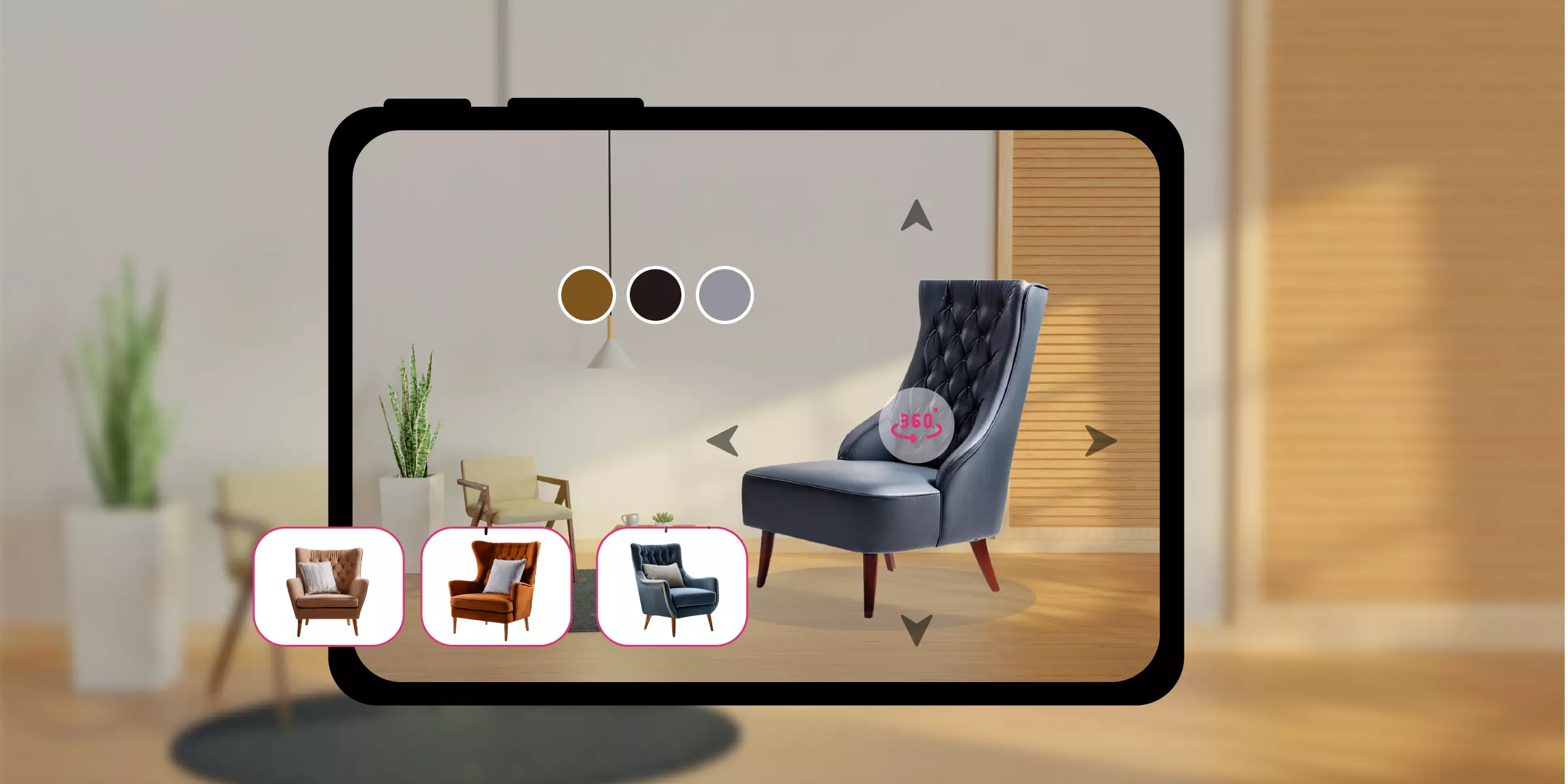
From custom sneakers and modular sofas to made-to-order machinery, buyers now expect to preview products in a convincing way before they check out. Visual product configurator software is what makes that expectation scalable. It turns static product pages into interactive, 3D experiences where customers can change colors, materials, dimensions, and add-ons and instantly see the impact in real time.
Over the years, the software industry has witnessed some noticeable growth across the market, which is a result of technological advancement, an increase in the need for personalized customer experiences, changing customers' preferences, and the demand for solving and streamlining complex product customization. Market estimates vary, but most reports value the product configurator market between $0.7-1.1B in recent years, with projections reaching $3-4B by 2030.
According to the 202 market research, the market size is projected to grow at a CAGR of 7.5% from 2024 to 2031. The above forecast is fueled by the fact that the tool is not limited to a particular niche industry. I have observed its adoption across sectors such as automotive, furniture, and other related sectors. This shows how it is getting utilized and spreading across the business world.
And by leveraging the visual product configurator, retailers can transform and sell complex products into interactive 3D experiences that can have a significant effect on their target audiences. Each customer can use the tool to configure their product to suit their preferences in real time.
Without much ado, I will be sharing with you the necessary future trends, features, and market analysis of the visual product configurator software.
{{component="/internal/widgets"}}
What is visual product configurator software?
The visual product configurator software is a cutting-edge technology that enables your users to customize your products in real time. As a software tool, it lets your users customize a product in real time, typically with high-quality 3D models, and see the results instantly on screen. Instead of reading a long options list or static images, the customer interacts with a live model, changing colors, materials, dimensions, components, or bundles, while the system automatically enforces rules and pricing.
It's gaining more expansion across industries such as e-commerce, retail, manufacturing, footwear, automotive, furniture, and construction. The configurator connects product data, business rules, and pricing logic with a visual rendering engine. This can be embedded on e-commerce sites, dealer portals, CPQ systems, or in-store kiosks. For manufacturers, it often ties directly into ERP, CAD, or PLM systems to ensure that every configured product is actually buildable.
Key features
Leveraging the visual product configurator software for your business gives your users the following features:
- 3D visualization: Customers will get to engage with the 3D visuals of your products to get the necessary details of the product. Through the 3D visuals, users can examine features such as colors, sizes, and materials to match their preferences.
- Customization option: This is a feature that allows your users to personalize the elements of the product to meet their needs. It enables you to offer modular products with various variations.
- AR & VR offerings: Some configurators offer AR & VR integrations to enable users to view products in real environments.
Visual product configurator software market analysis
It's no news that the visual product configurator is gradually being recognized and might reach the market size of $3.1 billion by 2031. It's helping to revolutionize how companies approach customer engagement, product customization, and product inventory. In fact, it serves as a useful tool for industries with complex products like cars, medical devices, and machinery, as it can help to engage their users in customizable 3D visuals in a scalable digital way.
As a result of these numerous advantages, there has been a strong demand in the market, and companies are more willing to get this SAAS software. Digital services taxes in several countries can increase the cost of cloud-based SaaS software overall, which may indirectly affect configurator pricing.
The majority of those who create this software tend to face higher costs for cloud servers or hardware. Sometimes, there might be a shortage of chips and devices, which might slow down the AR/VR projects. All these issues make the price of the software a little bit expensive in the market.
However, geographical areas like the Asia-Pacific, North America, and some parts of Europe show the highest adoption, mainly due to strong e-commerce and manufacturing ecosystems.
Core technologies associated with the working of the visual product configurator software

Behind every smooth configurator experience is a stack of advanced technologies working together:
1. Augmented Reality (AR)
AR superimposes the product that has been set up on the actual environment of your customer using a smartphone or tablet camera. An example would be a configured sofa or shelving system that would be placed in a living room in its actual size. This simplifies the concept of size, proportion, and fit to be judged and minimizes the chances people will feel disappointed once they receive it.
2. Virtual Reality (VR)
VR goes a step further by placing users inside immersive showrooms or virtual spaces. Buyers can walk through a configured kitchen, explore a factory layout, or step into a virtual store to experience products at a human scale. While less common than AR, VR is powerful for high-value B2B sales, trade shows, and experiential retail.
3. 3D imaging and real-time imaging
The 3D modeling and real-time rendering engines are relied upon by the visual configurators. Every product and variant thereof is created in a high-quality 3D representation; when the users change, the engine will recreate the textures, geometry, light, and shadows. Modern web technologies like WebGL and WebGPU enable high-quality, photorealistic 3D rendering on most modern devices.
4. AI & machine learning
It enhances the visual configurators by doing the following:
- Smart suggestions: Suggesting trends or complementary products based on user behavior and history.
- Guided selling: Prevents users from selecting infeasible or incompatible combinations and steers them toward valid and profitable configurations. This prevents users from selecting infeasible configurations, detects incompatible options, and guides them towards valid and profitable combinations.
- Dynamic bundle pricing and upsell: Bundle and upgrade optimization on the fly.
- Analytics: Understand that certain combinations perform the best and that certain users do not make it to the next stage to optimize rules and UX.
Combined, AR/VR, 3D rendering, and AI will help turn fixed configuration tools into superb, smart co-design experiences that can serve both the B2C and complex B2B purposes.

Tips to consider when selecting a visual product configurator software for your business
Choosing the right configurator is less about a long feature checklist and more about fit: fit with your products, your team, and your tech stack. Here are four key tips to guide your decision:
1. Match the tool to your use cases
Define what you’re configuring: cosmetic options (colors, finishes), modular systems, custom dimensions, or complex engineering rules. Some tools excel at simple consumer products; others specialize in heavy manufacturing, BOMs, and CAD integration.
2. Decide on your visualization level (2D, 3D, AR/VR)
For premium or complex products, static images rarely suffice. Real-time 3D and AR significantly improve engagement and help customers understand what they’re building, but they require better models and infrastructure. Choose the level of visual fidelity that matches your brand and product price point.
3. Assess integration and scalability
Your configurator has to connect to e-commerce (Shopify, WooCommerce, Magento), ERP, PIM, and maybe CPQ. Focus on platforms that have good APIs, web components, and integrations. Ensure that it is scalable to many languages, geographies, and channels without having to start over.
4. Take into account the security, performance, and vendor partnership
Your product logic and 3D properties are IP. Find secure cloud architecture, encryption, and compliance (e.g., SOC 2, ISO 27001, GDPR). Lastly, find a vendor who acts as a partner, providing support, best-practice guidance, and a product roadmap aligned with your long-term digital strategy.
Explore GlamAR’s visual product configurator software for your business
GlamAR is a B2B SaaS platform that combines 3D, AR, and VR to power immersive shopping experiences across retail, e-commerce, and manufacturing. Its visual product configurator sits inside a broader 3D stack, making it especially attractive for brands that want configurators, virtual try-ons, and virtual stores in one ecosystem.
At the 3D layer, GlamAR offers:
- Creation of 3D models - Our internal team constructs high-quality models that reflect your products.
- 360-degree product viewer - It allows your customers to view products and look at them from all angles.
- 3D product configurator - Your customers have the option of mixing and matching colors, finishes, and components in real time.
- 3D virtual photography - You can recycle 3D imagery to create product images without recapturing all the variations.
Additionally, the AR and VR solutions provided by GlamAR take configurator output to a higher level:
- Integration of AR / virtual try-on of categories such as furniture, eyewear, accessories, and beauty so that shoppers can see the products on themselves or in their space.
- VR virtual shops and showrooms, where customers can explore and configure products inside an immersive 3D environment.
GlamAR also emphasizes fast deployment, as brands can upload product details while the team builds or optimizes 3D assets, and then experiences are embedded via just a few lines of code across web, mobile, or in-store screens. GlamAR runs on SOC 2 and ISO 27001 certified cloud infrastructure and is fully GDPR-compliant. For brands that want a single partner for 3D models, visual configurators, and AR/VR commerce, GlamAR can deliver an end-to-end pipeline instead of a standalone widget.
{{component="/internal/widgets"}}
Future trends of the visual product configurator software market
The visual product configurator marketplace is shifting from the concept of nice 3D widgets to intelligent, omnichannel experience platforms. There are a number of trends defining its future:
- AI-based guided selling: Machine learning will help configurators predict the best combinations, auto-suggest upgrades, and avoid invalid builds, becoming more of a co-design assistant than a rigid tool.
- Greater integration of 3D/AR/VR: Photorealistic 3D, AR placement, and VR showrooms will be the norm, particularly in furniture, fashion, automotive, and industrial equipment. Customers will desire to view configurations within their context or take a virtual tour of the same prior to making purchases.
- Low-code, API-first offerings: Providers are driving low-code/no-code interfaces and headless APIs to enable brands to use the same configuration logic in their web portals, mobile apps, in-store applications, and partner portals.
- New verticals and territories: North America and Europe have already experienced significant expansion, but the region expected to experience the most rapid growth is the Asia Pacific due to e-commerce personalization and smart manufacturing projects.
Conclusion
The visual product configurator software is transforming the way of designing, selling, and experiencing products. Configurators are enabling brands to transform complex customer experiences into cozy, self-service shopping experiences, which result in increased levels of engagement, customer conversion, and reduced returns. Most industry forecasts predict a 7-14% CAGR through 2030. Investing in the present is a futuristic move by companies to digitalize their operations in the digital commerce and sales market.
Knowing the technologies underneath (3D, AR/VR, AI), finding the appropriate vendor, and adding tools such as GlamAR into your current stack, you can build immersive and visual experiences that can work both online, on your phone, and in-store. Visual configurators are now rapidly emerging as a competitive requirement, not a pleasant interactive prerequisite, in a market where buyers desire to see, customize, and rationalize every detail prior to committing themselves.
Visual product configurators are computer software that allows the buyer to design a product (color choices, materials, size, parts, etc) and view the visuals immediately, be it 2D, 3D, or AR/VR. It combines product data, rules, and a rendering engine so that each choice updates the model and pricing in real-time, preventing invalid or unbuildable selections.
It saves hassles during complex purchases, makes customers see what they are purchasing, and minimizes returns due to bad choices. The brands with configurators usually experience an increased engagement, quicker decision-making, higher average order value, and more precise quotes, particularly in configurable or made-to-order products.
There are several providers in this space, including platforms like Threekit, VividWorks, Emersya, and KBMax (Epicor), as well as broader CPQ/CPQ-plus vendors like Salesforce, Tacton, Configure One, and Infor CPQ. GlamAR focuses on 3D/AR/VR commerce and includes a 3D product configurator as part of its suite.
Most modern configurators can offer SDKs, web components, or embed codes, plus APIs for e-commerce, ERP, or PIM integration. Others provide plugins for platforms like Shopify, WooCommerce, or Magento, and vendors like GlamAR highlight deployment with just a few lines of code once models are ready. The actual effort depends on your tech stack and how tightly you want it connected to pricing, inventory, and CPQ.
Yes. The configurator can be offered as a guided selling assistant by many configurators using AI and rules-based engines to propose compatible options, popular combinations, or upsell bundles based on user behavior, previous purchases, or AR-based face/room measurements when applicable.
Modern configurators can provide realistic images that are nearly identical to the actual product in terms of hue, material, and proportion with high-quality 3D models, real-time rendering, and AR/VR integration; the difference is minimal enough to reduce uncertainty and returns in a meaningful way. No digital preview is perfect, but with a combination of excellent quality 3D models, real-time rendering, and AR/VR integration, modern configurators can create realistic images that are close enough to reality to make a significant reduction in the level of uncertainty and returns. There are special platforms, such as GlamAR, that focus on realistic rendering and 3D/AR experiences.
Discover how AR, VR and 3D can drive revenue growth in 2025
Schedule a call with our team